” Musee des Beaux Arts”
About suffering they were never wrong,
The old Masters: how well they understood
Its human position: how it takes place
While someone else is eating or opening a window or just walking dully along;
How, when the aged are reverently, passionately waiting
For the miraculous birth, there always must be
Children who did not specially want it to happen, skating
On a pond at the edge of the wood:
They never forgot
That even the dreadful martyrdom must run its course
Anyhow in a corner, some untidy spot
Where the dogs go on with their doggy life and the torturer’s horse
Scratches its innocent behind on a tree.
In Breughel’s Icarus, for instance: how everything turns away
Quite leisurely from the disaster; the ploughman may
Have heard the splash, the forsaken cry,
But for him it was not an important failure; the sun shone
As it had to on the white legs disappearing into the green
Water, and the expensive delicate ship that must have seen
Something amazing, a boy falling out of the sky,
Had somewhere to get to and sailed calmly on.
This poem is complex– so many parts– not only the subject, looking at Suffering from a painter’s perspective– but the gracefulness of the syntax, the precision of the word choice, the meter that more heavily stresses the significant syllables, the charm and discernment of the paintings by the 16th c. Flemish painter, Breughel, the myth of Daedalus and Icarus, the ironic, matter-of-fact perceptions of the speaker.
Auden visited an exhibit of Breughel’s works while he was staying in Brussels in 1938. Inspired by the works of the painter, he wrote this poem. The speaker begins, naming the subject in an elegantly -arranged first clause, “About suffering, they were never wrong,/ the old Masters:,” the italics stressing right away the two main topics: suffering and the painters that portray it, with the subject placed emphatically at the end. He. goes on, ” How well they understood/ Its human position,” The word “position” is curious. It implies a special place in us, but a “human” one; suffering can take place in one of us, while others nearby are dancing or working , free of the burden.
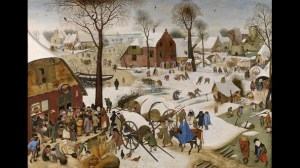
The first painting, alluded to, though not named, is “The Census at Bethlehem..” It shows a crowd of people waiting to register, chatting with neighbors, a boy opening a window in the attic above the Census office, a village full of people busying themselves with their daily activities, or ” just walking dully along,” all unaware of the distinctive figure in the scene, a woman in a long blue cloak, riding on a donkey, led by a man walking next to her. If we could see the woman more closely, we’d see that she was ready to bear a child. The world-changing event goes unnoticed by the people.
But one small group does notice,” when the aged are reverently, passionately waiting/ For the miraculous birth.” The accents on these words emphasize the anticipation of the old people, while at the same time, “there always must be/ “Children who did not specially want it to happen, /Skating,“On a pond at the edge of the wood, ” the three prepositional phrases drawing out their distance from the scene and their interest, as well.
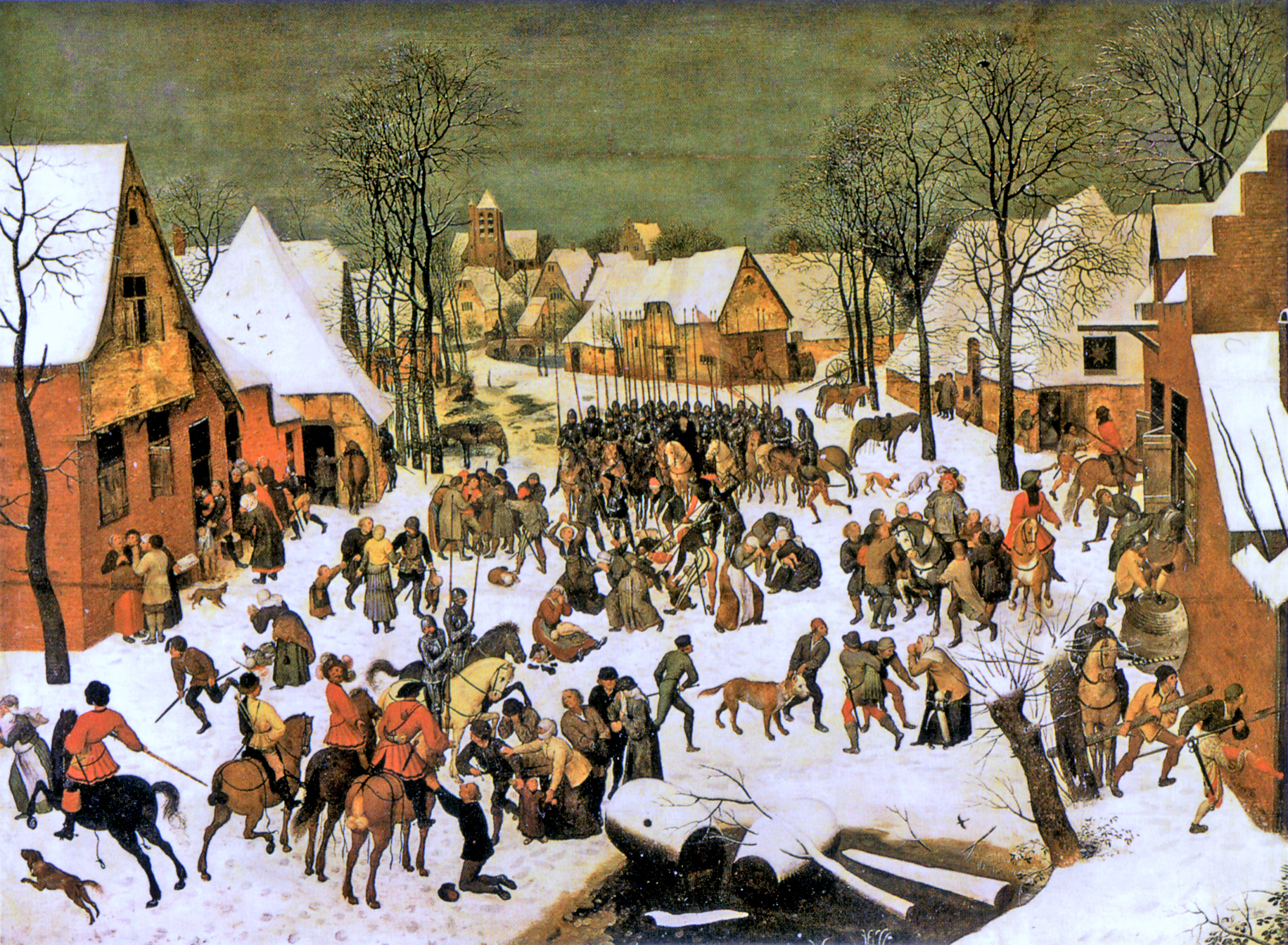
Coming to the next painting, the speaker continues: the old Masters “never forgot/ That even the dreadful martyrdom must run its course,” referring to ” The Massacre of the Innocents, ” a painting, in its original, that presents the horror of King Herod’s proclamation that all male children under the age of two should be slaughtered. But the old Masters, again, accepted that the suffering of children and parents, “must run its course,” even if ignobly: “Anyhow in a corner, some untidy spot/ Where the dogs go on with their doggy life,” and then, acknowledging the bitter irony, that children could be slaughtered while ” the torturer’s/ horse/ Scratches its innocent behind on a tree.”
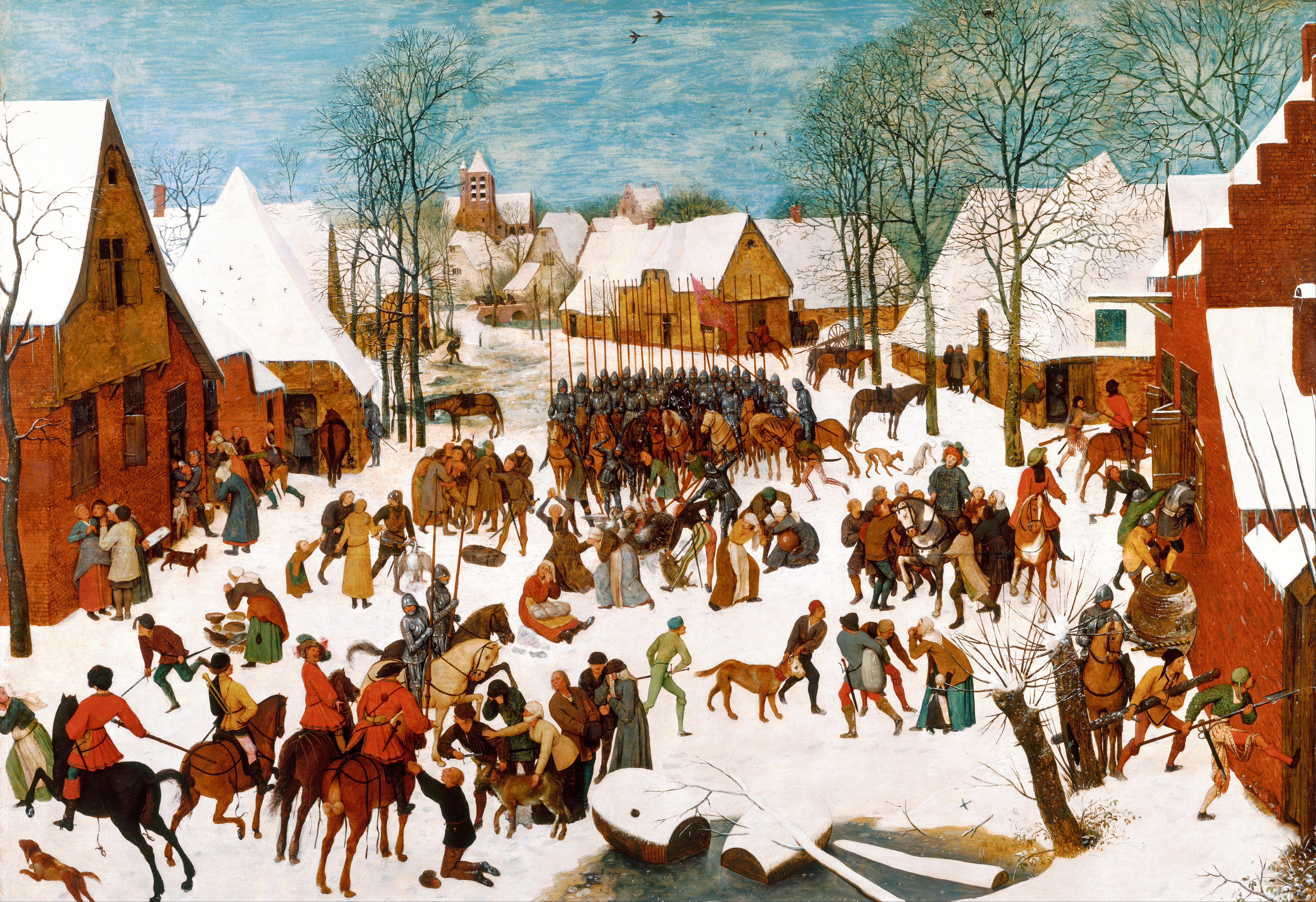
The original painting, below, showed children and babies being grabbed and carried off by the soldiers, but when the King saw it, he ordered the children over- painted into domestic animals, such as goats, dogs, geese, and bundles of food. One woman is crying over her pies. (see above)
In the second stanza the described painting becomes specific, ” The Landscape of the Fall of Icarus.” Auden identifies this one because it dramatizes so well the aspect of suffering that he’s found in Breughel’s paintings, that suffering is invisible to those not experiencing it. The myth of Daedalus and Icarus is about the proud boy, Icarus, who, against his father’s instructions, flies too close to the sun. With wings attached to his body with wax, the sun melts the wax and Icarus falls into the sea and drowns. The myth is known as a warning against pride, but Breughel’s interest is in the nature of suffering.
The painting shows a pastoral landscape by the sea, and includes a ploughman, dominant in the center, head down, pushing his plough, a shepherd among his sheep, gazing at the sky, away from the disturbance, and a man fishing in the bottom right-hand corner. Prominent in that area, also, is a fine galleon ship. Barely noticeable, are two little white legs, kicking out of the green water. The speaker observes: “everything turns away”; The ploughman “may have heard the splash, the forsaken cry, ” but, even so, does not react; perhaps he didn’t hear the boy, perhaps he didn’t care. The adjective “forsaken” here gathers all the fears the boy must have felt into that one word, adding a personal, pitiful, awareness into the commentary.
” …the sun shone/As it had to on the white legs disappearing…” As it had to”? Intentional wording, personifying the sun, to indicate that it was not concern, simply the relentless force of nature that caused the sun to illuminate the disaster. But a moral failure is true of the “expensive delicate” ship that ” must have seen, ” no question this time, and reinforced by what I see as the climax of the poem: the heavily stressed, “Something amazing, a boy falling out of the sky.” The brief moments of excitement are quickly followed by the dismal reality: even the well-equipped ship, “Had somewhere to get to and sailed calmly on, ” a commonplace phrase and a peaceful view of the ship, silently absolved from any responsibility for the drowning boy.
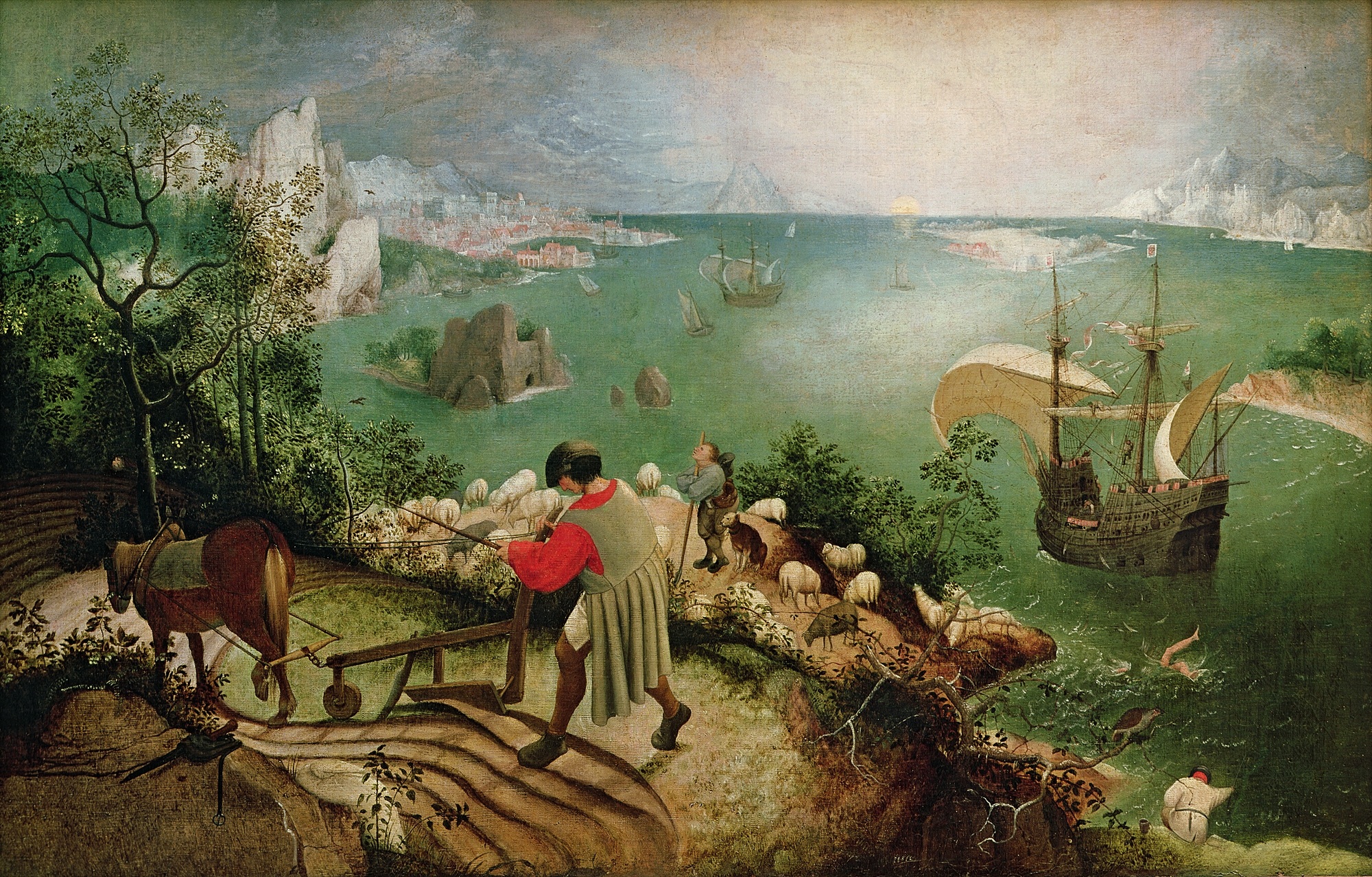
As the speaker notes, the desperate boy was close enough to be seen by the ship, just as the ploughman could hear the cry, but for them it was not “an important failure, ” and they turned away. Mary and Joseph are on a sacred mission, about to give birth to a savior, unremarked by the villagers. The babies and children are being slaughtered by the giant soldiers on horseback, in full armor and weaponry as they go about their duty.
The poem ends with a sense of acceptance, that suffering is inevitable, its “human position” is within the individual and it occurs among others who are either preoccupied with their own lives or simply indifferent. The paintings present the situation, but how does the speaker feel about it? Is he outraged? It’s often said that his tone is detached, unmoved by what he’s seeing, glossing over the tragedies, describing in greater detail the surrounding activities. Does he share the paintings realistic “message”? And does he speak for Auden?
It was 1938 with Europe on the brink of war; Auden had recently been present at brutal conflicts in China and Japan, and went to Spain to help during the Spanish Civil war. The meaning of “human position” has expanded for me. I see it now as a non-judgmental sympathy for the impulse people have to look away from the horror, to keep up with their lives. A “human” impulse. Auden moved to the U.S. a month after writing this poem.
 Poems that Shine