Sappho

Who Was She?

  I’d always been curious about Sappho, the idea of her, living a few hundred years before Christ, on a small island off Greece, with its own dialect and traditions, a poet and lyricist, that Plato later named “The Tenth Muse,” and she was known, even during her lifetime, as “The Poetess,” elevating her to Homer, whom they called ” The Poet.” Like most of us, I’d heard her name in connection with the term, Lesbian, and the poet, Sappho, as the origin. But when I started reading her poems, I forgot about that and was overwhelmed by their uniqueness and especially, their subjectivity. At that time, Epics, lengthy, third-person retellings of historic or legendary battles, were the subjects of poets, not the outpouring of personal emotions that I was finding in Sappho. I was moved by the simplicity of the first poem I read, “Evening Star”.

Hesperus

you bring

           home everything

       which light of day dispersed:

              home the sheep herds

                home the goat

            home the mother’s darling

Looking it over, I saw the vastness of the star in the universe, then Hesperus, the god who personified it, bringing together from the darkness, all the creatures that had been sent out with the light: the sheep, the goats, and the ultimate home comer of all, the mother’s darling , small and last, but as significant to the mother as the great sky above. With simple language and a few familiar figures, Sappho has opened to the reader the warm feeling of a mother’s love.

  As I went on to finish the collection, it became clear that Sappho’s overwhelming drive was for love–passionate love for women, for men, and above all, her worship of the Goddess of Love, Aphrodite. Poem # 31 expresses the exquisite depth of her desire:

. . . If I meet

you suddenly, I can’t

speak–my tongue is broken;

a thin flame runs under

my skin, seeing nothing,

hearing only my own ears

drumming, I drip with sweat.

trembling shakes my body

and I turn paler than

dry grass. At such times

death isn’t far from me

  A biography of Sappho would be scant and much of it open to question. What we do know is that she lived in the years from about 610 B.C. to 570 B.C., that she was from a wealthy family, and had three brothers. As a child, she composed and sang her own poems: I took; my lyre and said/ Come now, my heavenly/ tortoise shell; become/ a speaking instrument” Later, she spent a year or so in Sicily to escape political problems on Lesbos and while there, a story arose that Sappho had thrown herself off the Leucadian promontory over her unreturned love for a beautiful ferryman named Phaon. This was never substantiated but inspired several romantic poems up until the Renaissance. She was the first poet to write in the first person and to express freely her strong emotions:

O false as fair

I am forgotten ,then, by thee!

Or haply on another shine

Pretense of love–all faithlessly

The eyes that once looked into mine

0ut! naught I care

For such as can true love betray!

Love on, forsworn, your little day:

Ye are naught to me.

Sappho was probably bisexual, but that didn’t become an issue in her poetry for 2500 years after her death.

It has been verified that she wrote around 10,000 lines of poetry. Three hundred years after her death, scholars in Alexandria compiled her works into 9 volumes, but today, only six hundred and fifty, mostly fragments, survive. The rest were burned by Pope Gregory in 380 A.D. and by Pope Gregory V11 in 1073.

It was not necessarily the homosexual content that caused the disapproval of the Church. Sappho wrote hymns to the pagan goddesses, especially Aphrodite, and these would have been as highly suspect as homosexual relations. During Sappho’s time, it is not clear what the attitude was, but we are clear that same-sex unions were not persecuted or forbidden. In the early Christian period, promiscuity was punished and that is probably part of what brought about the burnings. The focus on lesbianism in Sappho did not occur until the Victorian era, when that became the main interest in her poetry, in spite of textual evidence that she was heterosexual, as well:

Of course, I love you

but if you love me,

marry a young woman!

I couldn’t stand it

to live with a young

man, I being older

We get only a glimpse of Sappho’s relationship with her mother and daughter, Cleis. The few fragments that exist suggest it was close and good-hearted:

It’s no use,

Mother dear, I

can’t finish my

weaving

You may          

blame Aphrodite

soft as she is

She has almost

killed me with

love for that boy

. . . and then a motherly Sappho as she scolds Cleis for inappropriate behavior:

Must I remind you, Cleis

that sounds of grief

are unbecoming in

a poet’s household?

and that they are not

suitable in ours?

. . .and on another gentler subject:

I have a daughter

Cleis, who is

like a golden

flower

I wouldn’t

take all Croesus’

kingdom, with love

thrown in, for her

What struck me as I was learning about Sappho was that I didn’t know who she was on the outside but I knew her almost intimately on the inside. With honesty and heart, she told the world of her passions, her thoughts, her love of life.

Although they are

only breath, words

which I command

are immortal

Introduction

Lately, I’ve been looking over poems that I remember liking in the past. From an anthology, alone in a room, I read them aloud, from Sappho to Yeats to Mary Oliver, soothed and satisfied.  At times, though, I’m stopped by a phrase or an image or the sound of the lines and I start to smile.  These are the poems that shine.

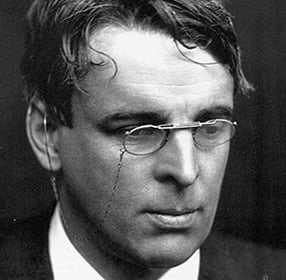
William Butler Yeats

Following are three poems by W.B. Yeats.  The first two, ” The Song of Wandering Aengus” and “Who Goes with Fergus? ” were written between 1892 and 1897,  years when Yeats often drew his subjects from Irish mythology and called himself,  “one of the last Romantics.”  The third, ” The Second Coming,” was written after the disastrous WW1, in 1919, a time of bitterness, loss of faith, mourning.


The Song of Wandering Aengus”


I went out to the hazel wood,
Because a fire was in my head,
And cut and peeled a hazel wand,
And hooked a berry to a thread;
And when white moths were on the wing,
And moth-like stars were flickering out,
I dropped the berry in a stream
And caught a little silver trout.
 
When I had laid it on the floor
I went to blow the fire a-flame,
But something rustled on the floor,
And someone called me by my name:
It had become a glimmering girl
With apple blossom in her hair
Who called me by my name and ran
And faded through the brightening air.
 
Though I am old with wandering
Through hollow lands and hilly lands,
I will find out where she has gone,
And kiss her lips and take her hands;
And walk among long dappled grass,
And pluck till time and times are done,
The silver apples of the moon,
The golden apples of the sun.
 
Source: The Wind Among the Reeds (1899)

     I’ve always been haunted by the musical rhythm of this poem.  Reading the first stanza aloud,  the child-like repetition of the iambic meter and the simplicity of the word choice took me, like a song, to a faraway land and time. Going into the hazel wood,  “because a  fire”  was  “in his head, ” Aengus relates,  step by step, his delicate preparation to fish and he waits for the right moment,  “when white moths were on the wing, / And moth-like stars were flickering out,” infusing the air with a ghostliness before he lowers the thread. 

      The story continues,  Aengus, getting the fire ready to cook the fish, hears someone call his name and a dazzling sight is there before him:  the “little silver trout” has miraculously turned into a “glimmering girl with apple blossoms in her hair.”   She then runs away “through the brightening air, ” and the vision fades.  

     The change in the last stanza is what struck me most. Suddenly old,  Aengus’ narrative voice becomes lyrical, lilting, ” Though I am old with wandering/ through hollow lands and hilly lands,/ I will find out where she has gone, / And kiss her lips and take her hands;/ And walk among long dappled grass.” I wondered, like most readers, what the girl represented to Yeats.  Was it his great, unrequited love,  Maud Gonne? I didn’t think so.  He usually  wrote about her more directly.  This poem has a transcendent quality.

     Fascinated by it for years,  I never felt the need to research Aengus.  But recently I did and found out why Yeats chose this god of Irish mythology.  Aengus was a king, the god of love, youth,  and, important here,  poetic inspiration.  Of the many tales told of him, one was that he saw a girl in his dreams and fell in love with her.  For years he searched and finally found her,  imprisoned by a spell that turned her, and 150 other girls , into swans.  He was told that if he could identify her among the others, he could marry her.  A gifted god,  he turned himself into a swan,  called out to her,  and together they flew away,  singing a beautiful song.      

    The parallels are clear,  but Yeats’ Aengus, unlike the mythical Aengus who had captured his love, is still wandering,  longing for the one who had so affected him.  Yet he doesn’t give up: ” I will find out where she has gone,” and  then, “pluck till time and times are done/ The silver apples of the moon, / The golden apples of the sun.”   The sensuous loveliness of the imagery suggests that the ” fire in his head” has been quelled by the gift of the glimmering girl: the inspiration to express what he feels in the language of poetry.


         “Who Goes With Fergus?”   


WHO will go drive with Fergus now,
And pierce the deep wood’s woven shade,
And dance upon the level shore?
Young man, lift up your russet brow,
And lift your tender eyelids, maid,
And brood on hopes and fear no more.

And no more turn aside and brood
Upon love’s bitter mystery;
For Fergus rules the brazen cars,
And rules the shadows of the wood,
And the white breast of the dim sea
And all dishevelled wandering stars.

My favorite poem. It’s provocative, mysterious, and the imagery is compelling.  In the first sentence,  the title subject, Fergus, is driving and the capitalized “WHO” implies “who will be brave enough,” or willing, to join him?  And the final word, “now”, tells us that this is new, a venture that is about to happen. The image in line 2,  that Fergus will “pierce the deep wood’s woven shade,”  affects you almost physically :  “pierce” is sharp, knife-like,  and the shade , entwined in the thickness of the trees, feels alive in its presence. Then, an immediate change, the followers will “dance upon the level shore,”  freely moving, no barriers.  The speaker urges a young man:  “lift up your russet brow, ” and the girl, to “lift your tender eyelids, maid” and behold a safe, peaceful world,  where they will “brood on hopes and fears no more.”

In the second stanza, the speaker repeats that they will no longer” brood/ Upon love’s bitter mystery; ”  because Fergus is in control.  Away from their troubled world and driving into an idyllic one,  Fergus rules not only the kingly “brazen” (means bronzed in context, but hints at Fergus, as well) carriages, but the vastness of nature: “the shadows of the wood,”  the womanized “white breast of the dim sea,”  and, the disturbing last sentence, the new land now seems to be the whole world captured by Fergus.  And it’s chaotic, ambiguous. The timeless order of the stars, the reliable placement of each of them, now “dishevelled” and “wandering,”  a universe scattering out of control. It adds a sinister possibility to the future.

For years I’ve read this poem, mesmerized by the beauty of the language, the feeling of suspense,  the elusive intention, ignorant of outside information. Now I wanted to read about Fergus, known as the “Poet King.”

He was the first Irish king of Ulster, ” One of the greatest of all Ulster heroes,”  star of many of their exploits.  The one referred to in Yeats’ poem is of minor importance except for the way it came about.  At this time, Fergus had fallen in love with a woman named Ness, asked her to marry him and she said yes,  under one condition: Fergus would have to allow her son , Conchubar, to rule as king in his place for one year, thereby making any sons that Conchubar had during that year to be legally in the line of kings of Ulster.  Fergus agreed and went away into the wilderness with his followers, to know, by some accounts, “the lasting mysteries of nature.” 

When he returned, after the year, he found that Ness had tricked him.  She had helped Conchubar become a success as king and he was so admired that the people wanted him to stay on, which he did, leaving Fergus to seek other challenges, which he did.  Yeats was always fascinated by the mystical and the occult and this episode in the myth of Fergus, looking to the wilderness as a spiritual refuge, would have, no doubt, been appealing to him.

Reviewing the interpretations of “Who Goes With Fergus?,”  the diversity of ideas reveals how bewitching the poem is.   A few examples:

“This poem is about the dichotomy of the thinker and the actor.”

“The poem is representative of Yeats’ symbolist phase”

“Who Goes With Fergus?”  Anyone willing to come face to face with their displacement in order to find a deeper sense of purpose and self-identity.”

“The poem revolves around our interpretation of “now” in the first line–is it before or after abdication ?”

“Who Speaks for Fergus?  Silence, Homophobia, and the Anxiety of Yeatsian Influence in Joyce”. (book title)

” This poem takes the tone of a passionate exhortation, evoking a mysterious figure in “Fergus” as it asks the reader not to “brood on hopes and fear.”

I could go on, there are several more examples.  But while these may widely diverge, each one is part of a cogent essay,  illustrating the depth and complexity of this short, 2-stanza poem.  For me, looking for meaning seems diminishing.  I just go with Fergus, in spite of the wandering stars, on his glorious trip into another world.
Source: The Rose (1893)

     “The Second Coming”

Turning and turning in the widening gyre

The falcon cannot hear the falconer;

Things fall apart; the centre cannot hold;

Mere anarchy is loosed upon the world,

The blood-dimmed tide is loosed, and everywhere

The ceremony of innocence is drowned;

The best lack all conviction, while the worst

Are full of passionate intensity.

Surely some revelation is at hand;

Surely the Second Coming is at hand.

The Second Coming! Hardly are those words out

When a vast image out of Spiritus Mundi

Troubles my sight: somewhere in sands of the desert

A shape with lion body and the head of a man,

A gaze blank and pitiless as the sun,

Is moving its slow thighs, while all about it

Reel shadows of the indignant desert birds.

(The darkness drops again; but now I know

That twenty centuries of stony sleep

Were vexed to nightmare by a rocking cradle,

And what rough beast, its hour come round at last,

Slouches towards Bethlehem to be born?

Source:  Michael Robartes and the Dancer.  (1921)

Well, I can’t say that this one made me smile, but when I read the first stanza, I was stopped by the chill of recognition.  It expressed remarkably my feelings about our country today.  Written in 1919, Yeats was devastated not only by the catastrophic losses in WW1, but the horrors in Ireland as it was fighting for independence from Great Britain,  and the recent Russian Revolution.  “The Second Coming” is considered one of the great poems in the English language and it also “may be the most thoroughly pillaged piece of literature in English.” * Phrases like “Things fall apart,” “the centre cannot hold,” “Slouches toward,” have been used again and again by writers and speakers from Yeats’ day to ours.  The first time I read it, I thought, “Why is he using cliches”?

Before commenting on the poem, I’d like to explain a few of the references:  1)  The “gyre” in line 1 is how Yeats conceived of history,  as a system of moving spirals,  each lasting about 2000 years, expanding outwards until the end when, at its largest, it overlaps with the one to come, which is at its smallest.  In Yeats’ view, the 20th century was at the point of one gyre,  that of Christianity,  giving way to the next.  2) The falcon in line 2 is behaving abnormally:  A falcon is controlled by his master, the falconer, who commands it and keeps it within a certain area.   3) The Second Coming refers to Christ’s return to earth to rescue the faithful from the apocalypse and take them to heaven, 4) Spiritus Mundi, or spirit of the world,  is the term for the theory of the collective unconscious,  a store of cultural images and symbols, shared by all humanity and providing inspiration for poets and those open to it.

The first stanza, by an unknown speaker, describes a world that has failed to be civilized, moral, productive, and, in fact,  has fallen to an apocalyptic state.  The falcon has lost connection with the falconer, cannot hear him, and is spinning out of control. The falconer can be seen as a metaphor for God. In the next line, the gyre is losing its power, the vortex that keeps the center intact, is weakening and “Mere,” (here meaning “pure” ), anarchy is taking over. The “ceremony of innocence” is drowned by the “blood-dimmed tide.”  The bloodshed of war has stained the sea. I was puzzled over the word, “ceremony.”  It could mean a celebration, a commemoration of innocence, consistent with the rest of the stanza’s examples. Or, it could mean ceremony in the sense of a show of formality, without the sincerity–Yeats suggesting an underlying negative.  But I think not.  It would be too out of place in the context.  The final two lines refer to the discouraging political attitudes of the people and the stanza ends with a sense of hopelessness.

“Surely, some revelation” . . .”Surely the Second Coming. .  . “. . . “The Second Coming!” the speaker reacts emotionally to the degradations in stanza 1.  And now, an image comes to him from Spiritus Mundi: an Egyptian sphinx  with a ” gaze as blank and pitiless as the sun.”  Its eyes reflect thoughtlessness, indifference, and a void of emotion.  The following comparison to the sun struck me. I’d never thought of the sun as a being. But now it was a brilliant, all-powerful, unthinking presence, uncaring, unchanging, unapproachable.  The beast begins its move with the heaviness of “slow thighs,”  and the desert birds, “indignant” of the intrusion by the frightening creature, swirl dazedly around, disappearing, only their shadows remain.

“The darkness drops again.”  The spell of the World Spirit has lifted, but the speaker has reached an understanding in my two favorite lines;  “but now I know/ that twenty centuries of stony sleep/ Were vexed to nightmare by a rocking cradle,” During the 2000 years before Christianity the “stony” sphinx was sleeping, then “vexed to nightmare” by the birth of Christ and by a new age of Christianity that had begun. But what now?  The vision that he saw, the “rough beast’ is on its way,  his turn at last,  but slouching towards Bethlehem, the verb conveying unhurried, unaware, uninterested.  The age of Christianity is over and this will be the new one.  Yeats feared this possibility and wroteThe Second Coming ”  to express his fear and perhaps awaken others to the threat as well.   This was in 1919, roughly 123 years ago, but great art resonates throughout generations and I’d say this poem does especially to ours.

*theparisreview.org>4/7/15.

W. H. Auden


                           ” Musee des Beaux Arts”


About suffering they were never wrong,
The old Masters: how well they understood
Its human position: how it takes place
While someone else is eating or opening a window or just walking dully along;
How, when the aged are reverently, passionately waiting
For the miraculous birth, there always must be
Children who did not specially want it to happen, skating
On a pond at the edge of the wood:
They never forgot
That even the dreadful martyrdom must run its course
Anyhow in a corner, some untidy spot
Where the dogs go on with their doggy life and the torturer’s horse
Scratches its innocent behind on a tree.

In Breughel’s Icarus, for instance: how everything turns away
Quite leisurely from the disaster; the ploughman may
Have heard the splash, the forsaken cry,
But for him it was not an important failure; the sun shone
As it had to on the white legs disappearing into the green
Water, and the expensive delicate ship that must have seen
Something amazing, a boy falling out of the sky,
Had somewhere to get to and sailed calmly on.

This poem is complex– so many parts– not only the subject, looking at Suffering from a painter’s perspective– but the gracefulness of the syntax,  the precision of the word choice,  the meter that more heavily stresses the significant syllables, the charm and discernment of the paintings by the 16th c. Flemish painter, Breughel, the myth of Daedalus and Icarus, the ironic, matter-of-fact perceptions of the speaker.

      Auden visited an exhibit of Breughel’s works while he was staying in Brussels in 1938. Inspired by the works of the painter, he wrote this poem. The  speaker begins, naming the subject in an elegantly -arranged first clause, “About suffering,  they were never wrong,/ the old Masters:,”  the italics stressing right away the two main topics:  suffering and the painters that portray it, with the subject placed emphatically at the end. He. goes on, ” How well they understood/ Its human position,”  The word “position”  is curious. It implies a special place in us, but a “human” one;  suffering can take place in one of us, while others nearby are dancing or working , free of the burden.

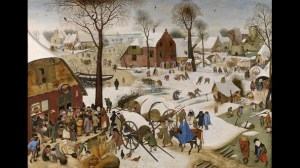
     The first painting, alluded to, though not named, is “The  Census at Bethlehem..”   It shows a crowd of people waiting to register, chatting with neighbors, a boy opening a window in the attic above the Census office, a village full of people busying themselves with their daily activities, or ” just walking dully along,” all unaware of the distinctive figure in the scene, a woman in a long blue cloak, riding on a donkey, led by a man walking next to her. If we could see the woman more closely, we’d see that she was ready to bear a child.  The world-changing event goes unnoticed by  the people.


      But one small group does notice,” when the aged are reverently, passionately waiting/ For the miraculous birth.” The accents on these words emphasize the  anticipation of the old people, while at the same time, “there always must be/ “Children who did not specially want it to happen, /Skating,“On a pond at the edge of the wood,  ” the three  prepositional phrases drawing out their distance from the scene and their interest, as well.

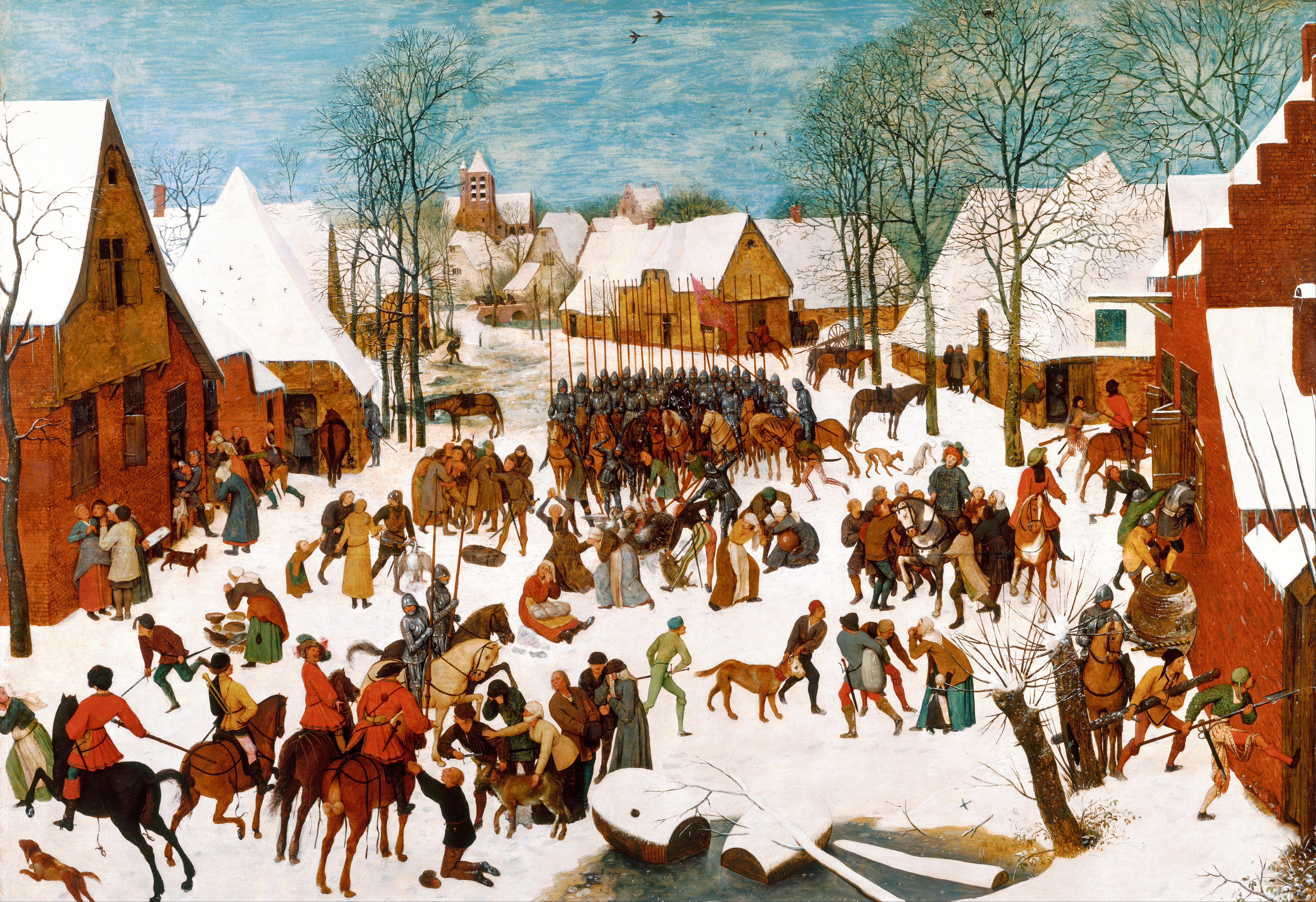
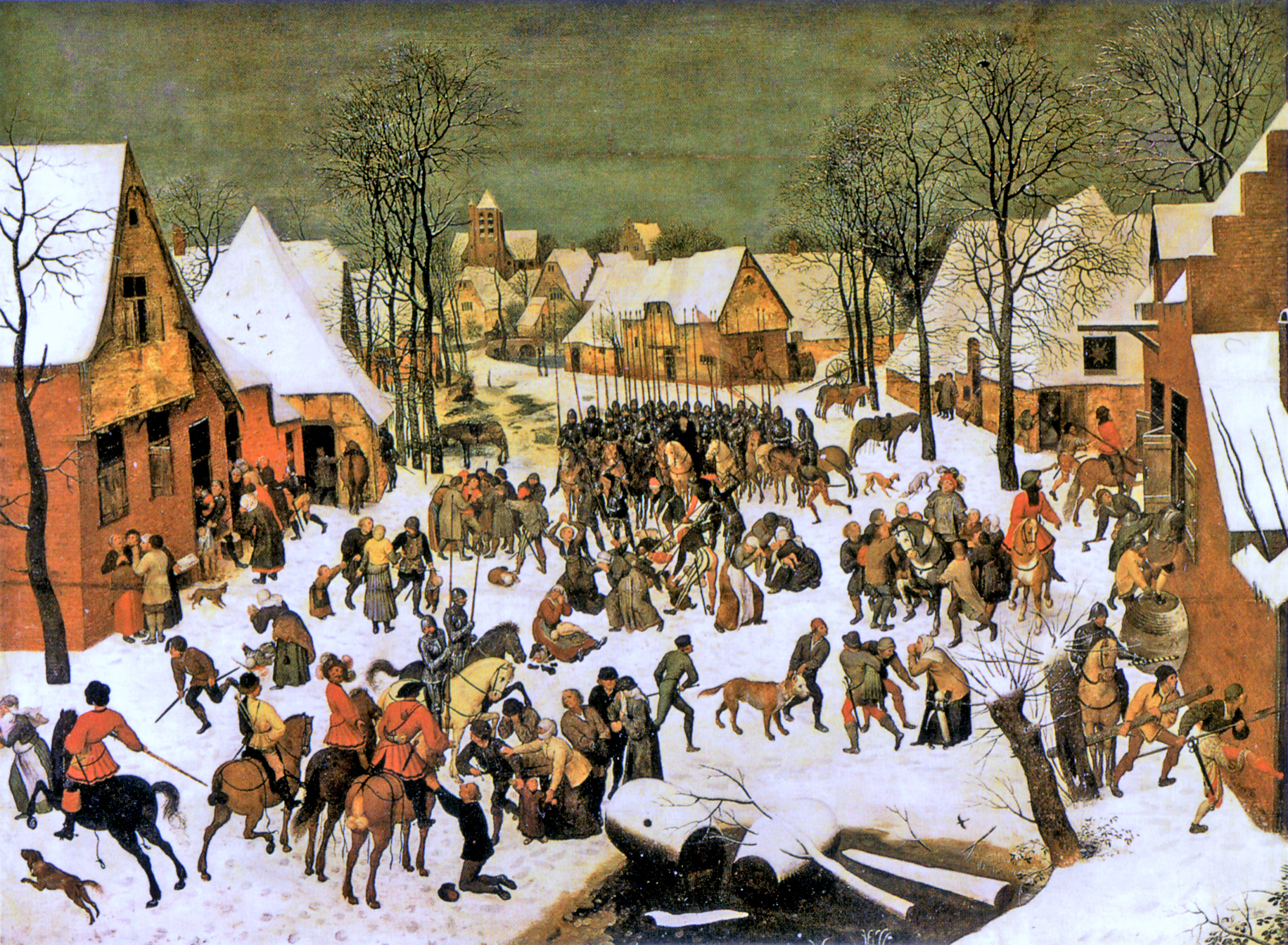
    Coming to the next painting, the speaker continues: the old Masters “never forgot/ That even the dreadful martyrdom must run its course,” referring to ” The Massacre of the Innocents, ”  a painting,  in its original, that presents the horror of King Herod’s proclamation that all male children under the age of two should be slaughtered.  But the old Masters, again, accepted that the suffering of children and parents, “must run its course,”  even if ignobly: “Anyhow in a corner, some untidy spot/ Where the dogs go on with their doggy life,” and then, acknowledging the bitter irony,  that children could be slaughtered while ” the torturer’s/ horse/ Scratches its innocent behind on a tree.”   

“Massacre of the Innocents, ” 1565-1567, copy by an unknown painter

The original painting, below, showed children and babies being grabbed and carried off by the soldiers, but when the King saw it, he ordered  the children over- painted into domestic animals, such as goats, dogs,  geese, and bundles of food.  One woman is crying over her pies.   (see above)

Kindermord_(Pieter_Brueghel_d._J.).jpg (1831×1343)
“Massacre of the Innocents”, Pieter Brueghel the Elder, 1566

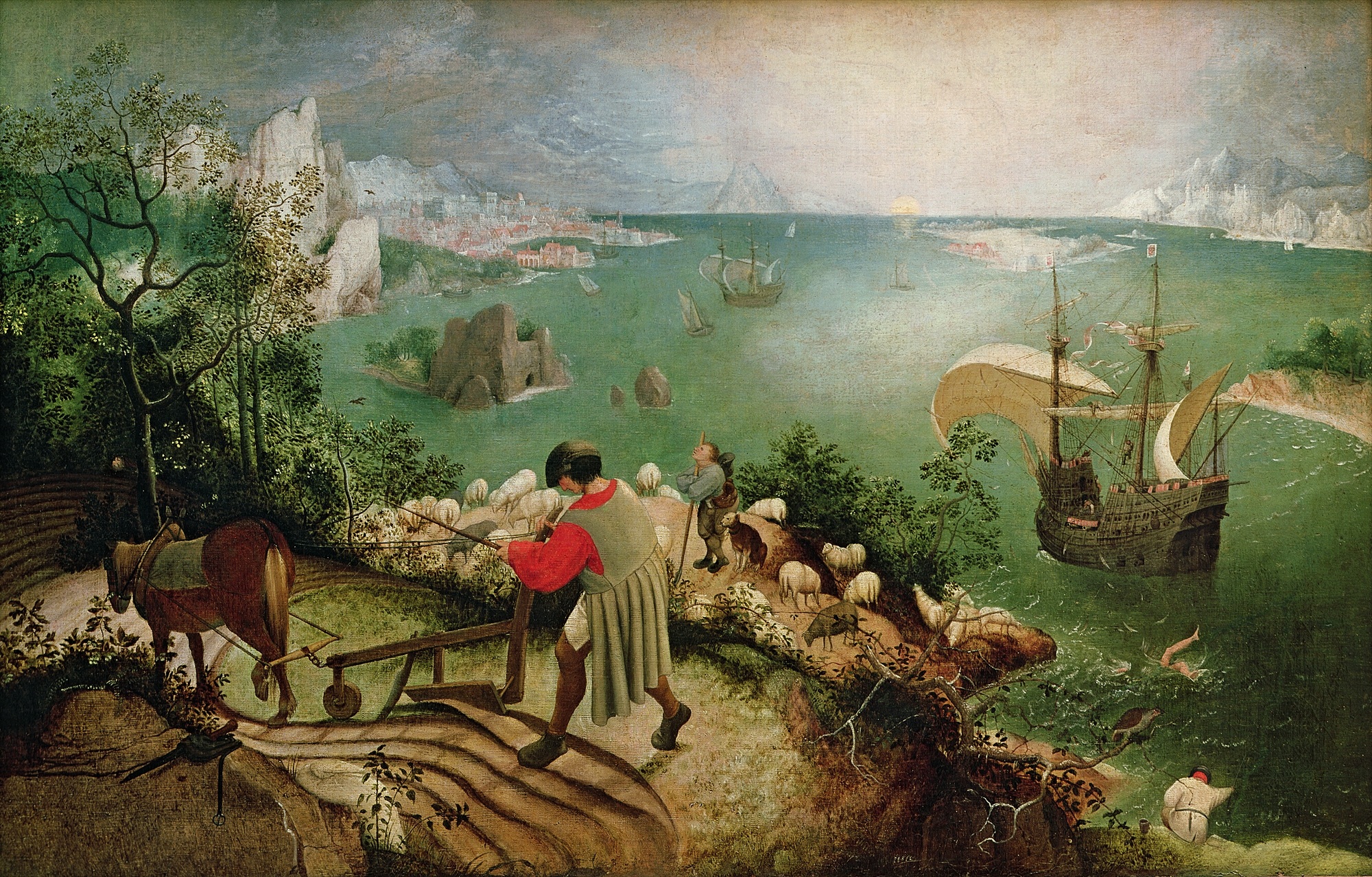
     In the second stanza the described painting becomes specific, ” The Landscape of the Fall of Icarus.”  Auden identifies this one because it dramatizes so well the  aspect of  suffering that he’s found in Breughel’s paintings, that suffering is invisible to those not experiencing it. The myth of Daedalus and Icarus is about the proud boy, Icarus, who, against his father’s instructions, flies too close to the sun.  With wings attached to his body with wax, the sun melts the wax and Icarus falls into the sea and drowns. The myth is known as a warning against pride, but Breughel’s interest is in the nature of suffering.

The painting shows a pastoral landscape by the sea, and includes a ploughman, dominant in the center, head down, pushing his plough, a shepherd among his sheep, gazing at the sky,  away from the disturbance, and a man fishing in the bottom right-hand corner.  Prominent in that area, also, is a fine galleon ship.  Barely noticeable, are two little white legs, kicking out of the green water. The speaker observes: “everything turns away”;   The ploughman “may have heard the splash, the forsaken cry, ” but, even so, does not react;  perhaps he didn’t hear the boy,  perhaps he didn’t care.  The  adjective “forsaken” here gathers all the fears the boy must have felt into that one word, adding a personal, pitiful,  awareness into the commentary.

” …the sun shone/As it had to on the white legs disappearing…” As it had to”?  Intentional wording, personifying the sun, to indicate that it was not concern,  simply the relentless force of nature that caused the sun to illuminate the disaster.  But a moral failure is true of the “expensive delicate” ship that ” must have seen, ” no question this time, and reinforced by what I see as the climax of the poem:  the heavily stressed, “Something amazing, a boy falling out of the sky.”  The brief moments of excitement are quickly followed by the dismal reality: even the well-equipped ship, “Had somewhere to get to and sailed calmly on, ” a commonplace phrase and a peaceful view of the ship, silently absolved from any responsibility for the drowning boy.

“Landscape with the Fall of Icarus, ”    Pieter Bruegel the Elder   1566

As the speaker notes,  the desperate boy was close enough to be seen by the ship, just as the ploughman could hear the cry,  but for them it was not “an important failure, ” and they turned away.  Mary and Joseph are on a sacred mission, about to give birth to a savior, unremarked by the villagers.  The babies and children are being slaughtered by the giant soldiers on horseback, in full armor and weaponry as they go about their duty.

The poem ends with a sense of acceptance,  that suffering is inevitable,  its “human position” is within the individual and it occurs among others who are either preoccupied with their own lives or simply indifferent.  The paintings present the situation, but how does the speaker feel about it?  Is he outraged? It’s often said that his tone is detached,  unmoved by what he’s seeing,  glossing over the tragedies, describing in greater detail the surrounding activities.  Does he share the paintings realistic “message”?  And does he speak for Auden?

      It was 1938 with Europe on the brink of war;  Auden had recently been present at brutal conflicts in China and Japan, and went to Spain to help during the Spanish Civil war.  The meaning of “human position” has expanded for me.  I see it now as a non-judgmental sympathy for the impulse people have to look away from the horror, to keep up with their lives.  A “human” impulse.  Auden moved to the U.S. a month after writing this poem.

Wallace Stevens

  “The Emperor of Ice Cream”


Call the roller of big cigars,
The muscular one, and bid him whip
In kitchen cups concupiscent curds.
Let the wenches dawdle in such dress
As they are used to wear, and let the boys
Bring flowers in last month’s newspapers.
Let be be finale of seem.
The only emperor is the emperor of ice-cream.

Take from the dresser of deal,

Lacking the three glass knobs, that sheet

on which she embroidered fantails once

And spread it so as to cover her face.

If her horny feet protrude, they come

to show how cold she is, and dumb.

Let the lamp affix its beam.

The only emperor is the emperor of ice cream.


The Emperor of Ice-Cream” is a poem from Wallace Stevens‘s first collection of poetry, Harmonium (1923). Stevens’ biographer, Paul Mariani,

I love the commanding voice that starts this poem, “Call the roller of big cigars/ The muscular one.”  We don’t know who the voice belongs to or what the need, but he’s in charge.  A strangely small task for this big man: “and bid him whip/ In kitchen cups concupiscent curds.”  He continues, ” let the wenches dawdle (flirt) in such dress/ As they are used to wear,”  nothing fancy, just details, suggestive of sex.  There’s a sense of defiance in his orders.  Even the flowers are to be brought in “last month’s newspapers, ” stale news in old, crumpled paper.

 But the tone of the next line changes abruptly, becomes philosophical, “Let be be finale of seem.”  “Seem” would be at a usual funeral:  no muscular men, rollers of big cigars, best dresses for the women,  here called, “wenches, ” today’s clean paper for the flowers.  The “be” is the reality of today: no religious references, no pretense, no solemnity,  just the  fact of a death, which will become the end, the finale, of the illusion of “seem.”

The enigmatic last line,  “The only  emperor is the emperor of Ice cream,”  I’ll put off until we finish the poem.

In the second stanza,  the activity moves to the bedroom of the dead woman and her “dresser of deal/ ( a cheap pine), lacking the three glass knobs”  telling us that she was probably rather poor,  but, in a touching remark, we hear that, in spite of her surroundings, she had an urge to create something lovely, and embroidered fantails ( small, delicate birds from Asia), ” on her sheet.  The  speaker instructed the neighbors to spread it on her face to cover it.  But,  to expose the deathly side of her as well, to let her  “horny feet protrude . . .  To show how cold she is, and dumb.” he directs the lamp’s beam to shine on her alone.

What’s missing, though, is any recognition of an ultimate spiritual power that watches over us, that maybe promises an afterlife,  God.  I think that the emperor serves this role.  He’s the title of the poem and proclaimed twice within it,  in concluding statements:  ” The only emperor is the emperor of ice cream.”  The key word here is “only,”  which he says twice. He seems to be emphasizing that there is no God, only the emperor and his promises are not of eternity, but of ice cream, cold, delicious, with a soothing, sensual texture. Like us, it is temporary, vital, desired, and it melts slowly until there’s nothing left, like the body in the bedroom.  For this funeral, we have muscular men with big cigars, dawdling wenches, lusty ice cream, unimportant news. Pleasure is what we should celebrate.

We can’t assume that Wallace Stevens is writing about his own beliefs.  But he has said without hesitation that he doesn’t believe in God.  In the 1930’s and 40’s, he kept  notebooks that he called  “Adagia 1 and 2 ” that were filled with aphorisms about the nature of poetry,  philosophical musings,  and his  personal beliefs.  I’ll list some that I think will widen our understanding of the poem:

Poetry is a means of redemption.

It is the belief and not the god that counts.

God is in me or else is not at all (does not exist).

This  happy creature–It is he that invented the Gods.  It is he that put into their mouths the only words they have ever spoken.

After one has abandoned a belief in god, poetry is that essence which takes its  place as life’s redemption.

In poetry,  you must love the words, the ideas and images. and rhythms with all your capacity to love anything at all.

If you have any comments you’d like to make, please do so.


Two Poets, One Mood

“The World Is Too Much With Us” Williams Wordsworth 1801


The world is too much with us; late and soon,
Getting and spending we lay waste our powers;
Little we see in Nature that is ours;
We have given our hearts away, a sordid boon!
This Sea that bares her bosom to the moon,
The winds that will be howling at all hours,
And are up-gathered now like sleeping flowers,
For this, for everything, we are out of tune;
It moves us not. —Great God! I’d rather be
A Pagan suckled in a creed outworn;
So might I, standing on this pleasant lea,
Have glimpses that would make me less forlorn;
Have sight of Proteus rising from the sea;
Or hear old Triton blow his wreathèd horn.
 

I was reading through a book of sonnets when the one above by Wordsworth appeared. It’s an emotional poem and all I could think of was “Poor Wordsworth.”  His love of nature was profound and spiritual-we know that from his poetry.   And here he is, in the middle of the Industrial Revolution, trying to regain the transcendent bond with nature that he once had. In the first four lines, he speaks generally for all of us. The world (cities, people) is closing in on us, pursuing repetitious and useless “Getting and spending,” letting our talents go undeveloped, even “given our hearts away.”

     Then, abruptly, he becomes impassioned:

Great God! I’d rather be

A Pagan suckled in a creed outworn:

so that, once again, there would be “glimpses that would make me less forlorn,” see Proteus “rising from the sea,” or hear “old Triton” blowing into his “wreathed horn.” “Standing on this pleasant lea,” Wordsworth laments the loss of these mythological fictions, inspired by nature, and abhors the urbanizing changes in his world today. He summarizes his thoughts,”Little we see in Nature that is ours;”

 A few days later, browsing through another poetry book, I saw this title, “Disillusionment at Ten O’clock.” It was by Wallace Stevens:

The houses are haunted

By white night-gowns.

None are green,

Or purple with green rings,

Or green with yellow rings,

Or yellow with blue rings.

None of them are strange,

With socks of lace

And beaded ceintures.

People are not going

To dream of baboons and periwinkles.

Only, here and there, an old sailor,

Drunk and asleep in his boots,

Catches tigers

In red weather.

Wallace Stevens 1924

When I finished the poem, I felt I had found these two, over one hundred years apart, a romantic and a modernist, in the same mood; different eras, different styles, different intensity, different structures, but the same disappointment with the state of their worlds –1801 and 1924- and the same feelings of loss and aloneness.

Stevens presents his subject directly at the start, as Wordsworth did, “The houses are haunted/ By white night-gowns,” metaphors that tell us that he’s writing about his community, his world. The “white night-gowns” are all the same, and, at night, these ghosts drift through the houses, spreading their aura, and their dullness, everywhere. Stevens, in one eight-word sentence, with simple concrete imagery, creates a heaviness of spirit, as Wordsworth did in four compelling, descriptive lines.

Stevens goes on to give examples of his “white night-gowns” in a mildly mocking tone, “None are green, / purple with green rings, / Or green with yellow rings, Or yellow with blue rings.” The repetition of the word order and common words, — Or, rings, with—three times, the primary colors, reflect his point that the ghosts in white are without imagination, without life.

In the following four lines, Stevens gives his examples of unfamiliar, somewhat exotic images: “socks of lace . . . beaded ceintures (French for belt or sash) . . .” baboons” coupled with “periwinkles.” Wordsworth, too, gives illustrations in his more elaborative, 19thc. style : “This Sea that bares her bosom to the moon;/ The winds that will be howling at all hours, / And are up-gathered now like sleeping flowers;” dramatic flourishes of nature, personifying the Sea, the moon, the winds, the flowers.

Now we see that the structures, though one is a Petrarchan sonnet and the other free verse, follow the same pattern: explanations of their discontent; their own examples of lush and imaginative imagery, and, at the end, visions of where this inspiration might still be found.

For Wordsworth, it would be a feeling of union with Nature, here personified by the figures of ancient myth, able to exist and perform in any sphere of the universe, the sea, the sky, the underworld, the earth. Stevens, on the other hand, proposes that possibly an “old sailor,” aged, uneducated, unaffected by today’s society, and unconsciously “asleep in his boots,” would be free to leap out of reality and catch tigers “In red weather.”

The same progression of points, the same pattern of illustration, tempt me to wonder if Stevens, an admirer of Wordsworth, intentionally echoed “The World Is Too Much With Us . . . . “ in his own style. In any case, the similarity between the two poems that please me most is that each poet is extolling the value he feels deeply about. For Wordsworth, it would be Nature; for Stevens, imagination. For both, poetry.